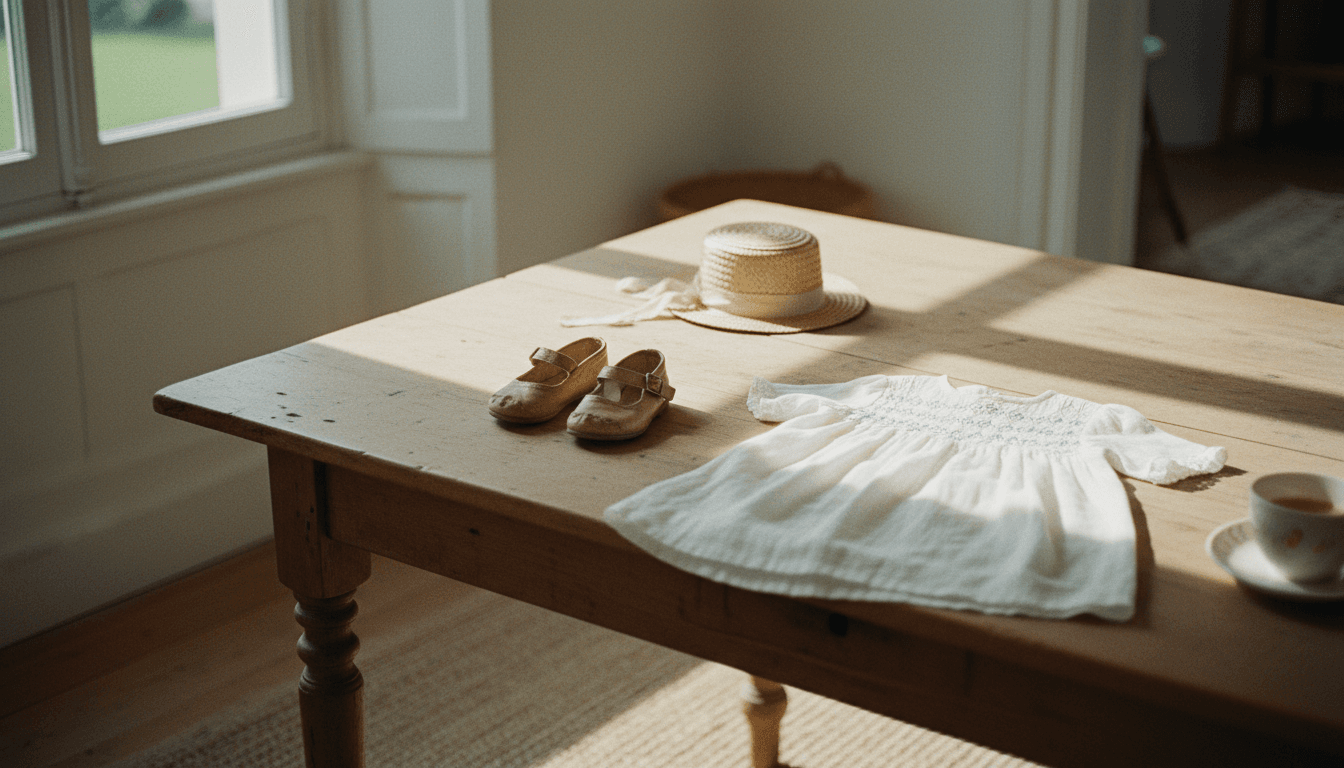
A handmade children's clothing artisan preserves traditional craftsmanship by creating heirloom-quality garments with intricate details like hand smocking and vintage-inspired silhouettes. These skilled makers provide unique, durable alternatives to mass-produced fashion; they ensure that every piece is crafted with the care and precision required for timeless family keepsakes.
In a marketplace saturated with disposable garments that lose their shape after a single wash, finding clothing that honors the magic of childhood feels increasingly difficult. Modern parents often struggle to reconcile their desire for timeless style with the reality of mass produced pieces that lack soul and durability. This disconnect is exactly why the role of the handmade children's clothing artisan has never been more vital. When a garment is crafted by hand, it transcends mere utility to become a wearable piece of art. This article explores the meticulous world of the luxury artisan, from the precise geometry of Parisian smocking to the ethical standards of the independent atelier. You will discover how to identify genuine craftsmanship, understand the true value of human artistry, and learn why these heirloom pieces remain the gold standard for a sophisticated coastal wardrobe.
Defining the Handmade Children's Clothing Artisan
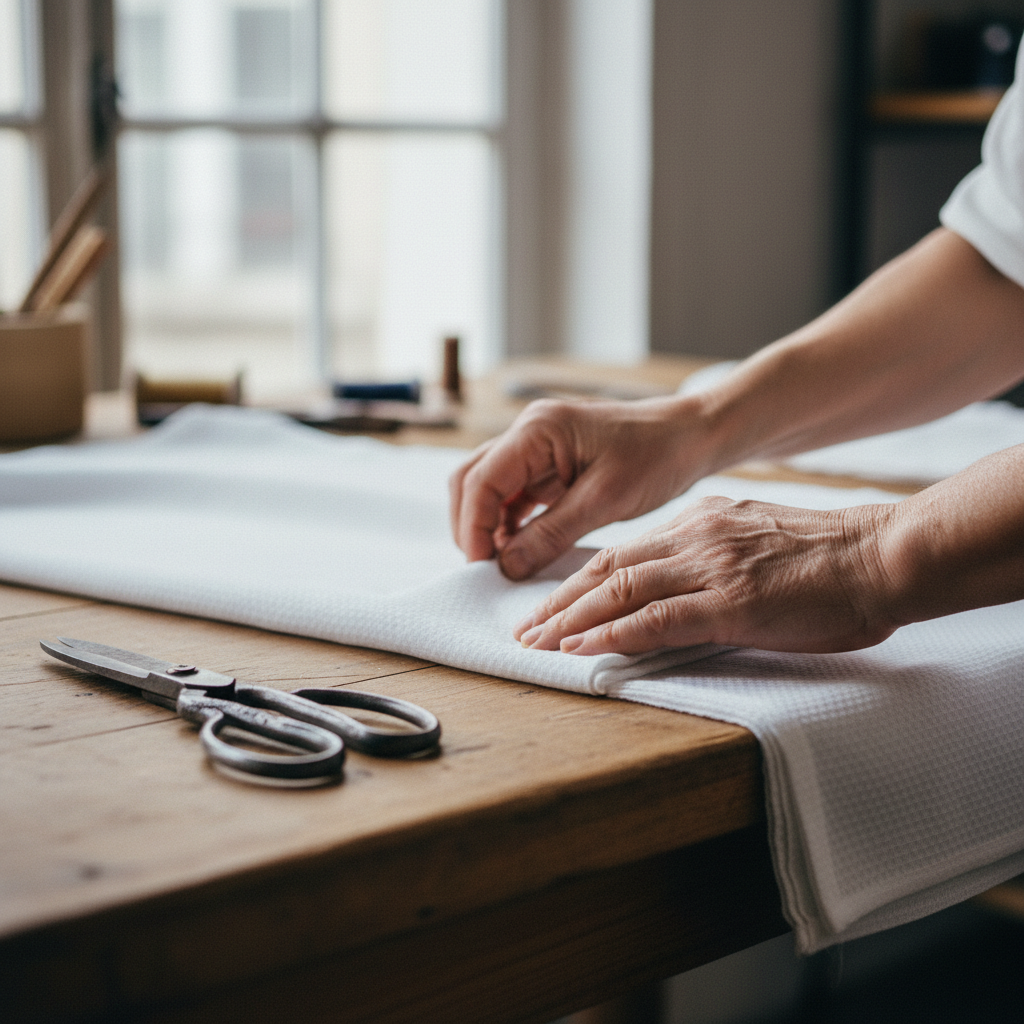
To understand the soul of a garment, one must look past the fabric and into the hands that shaped it. A true handmade children's clothing artisan acts not merely as a technician, but as a custodian of cultural heritage. While the modern market is saturated with hand-finished items, a term often masking factory production where a single button or tag is simply attached by a person, the artisan approach is fundamentally different. It is a holistic, slow process where every seam and pleat is guided by human intuition and decades of refined skill.
The vision for Petit Soleil was born from this distinction. During a three-year stay in France, I moved beyond the fast-fashion boutiques to discover the quiet mastery within local Parisian ateliers. These spaces revealed that true luxury is not found in volume, but in the intentionality of a single needle. You can learn more about our Parisian sourcing and how these relationships define our curated heirloom collections. By choosing pieces crafted this way, families are not just buying clothes; they are preserving a standard of artistry that refuses to be rushed. This appreciation for slow fashion ensures that each garment carries a legacy of quality, far removed from the ephemeral nature of mass-produced goods.
What Does Artisan Mean in the World of Luxury Childrenswear?
In the context of luxury fashion, the term artisan describes a master of their craft who possesses total autonomy over the garment's creation. Unlike the assembly line approach, where a worker might repeat a single, isolated task for hours, the handmade children's clothing artisan understands the entire architecture of the piece. This level of skill often represents a lineage of inherited knowledge, passed through generations of Parisian makers who view their work as a vocational calling rather than a manufacturing job.
A machine is inherently indifferent to the materials it processes. It runs at a fixed speed with a constant tension, regardless of the textile beneath the needle. Conversely, a true artisan understands the unique behavior of natural fibers. They recognize that a feather-light cotton voile requires a different touch than a structured, textured linen. When working with these materials, the artisan manually adjusts their stitch length and hand tension based on the specific weave and weight of the fabric. This intuitive adjustment ensures that seams remain supple and do not pucker, a detail that is essential for maintaining the silhouette of a garment in varying climates.
This autonomy is what differentiates a luxury heirloom from a mass-produced item. When you browse our curated heirloom collections, you are seeing the result of a maker who had the freedom to slow down. They might spend an extra hour ensuring a floral pattern aligns perfectly at a side seam or reinforcing a stress point by hand. By prioritizing the integrity of the garment over the speed of the output, the artisan ensures that every piece meets the high-end standards expected by families who value authentic artistry.
The Soul of the Stitch: The Mastery of Parisian Smocking and Embroidery
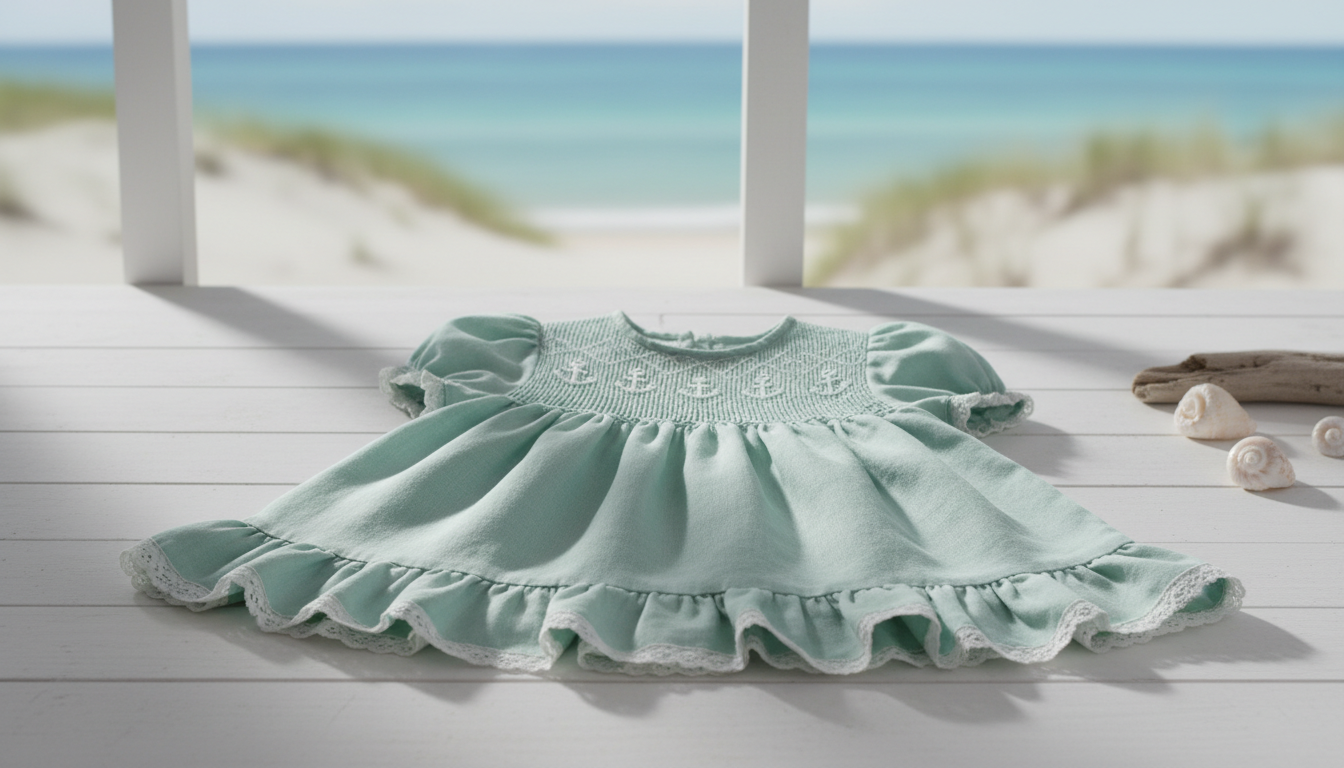
The true distinction of an heirloom lies in the architecture of its embellishment. In the ateliers of Paris, smocking is not a decorative afterthought; it is a structural feat. A handmade children's clothing artisan begins by meticulously gathering the fabric into miniature, uniform pleats before a single decorative stitch is placed. This foundational step is critical. By hand-pleating, the artisan creates a textile that possesses natural, mechanical stretch without the necessity of synthetic elastics. While 2026 fashion forecasts suggest a rise in the "smocked look" across mass-market brands, these items usually rely on machine-run embroidery over pre-shirred fabric. Those versions often feel stiff or restrictive, whereas true artisan smocking offers the gentle, rhythmic expansion required for a growing child to move with ease.
The mastery deepens within the specific embroidery techniques used to secure these pleats. One hallmark of our curated heirloom collections is the point de poste, or bullion stitch. This technique requires the artisan to wrap thread around the needle with precise tension to create three-dimensional, sculptural floral motifs. A machine cannot replicate the height or the delicate soul of a hand-turned bullion rose. Furthermore, the artisan employs a traditional scallop edging, finished with a tight, manual buttonhole stitch. This provides a structural integrity that prevents the delicate edges from fraying after repeated laundering, a common failure in machine-finished items.
Feature | Machine-Smocked "Look" | Artisan Hand-Smocking |
|---|---|---|
Elasticity | Relies on synthetic elastic thread; can feel restrictive. | Natural mechanical stretch from hand-gathered pleats. |
Embroidery | Flat, two-dimensional patterns. | Three-dimensional point de poste (bullion) stitches. |
Durability | A single thread break can unravel an entire row. | Each segment is individually hand-knotted and secured. |
Edge Finish | Merrowed or laser-cut; prone to fraying over time. | Hand-finished scallop edging with reinforced stitching. |
When an artisan works, every pass of the needle is a conscious choice. If a machine encounters a slight knot in the thread, it continues its programmed path, often creating a weak point that will eventually fail. The artisan, however, knot-finishes every segment by hand. This individual attention ensures that even the most delicate embroidery remains resilient, allowing the garment to be worn, loved, and eventually passed down to the next generation.
Why Human Craftsmanship Commands a Higher Investment
The resilience of a hand-knotted thread leads directly to a conversation about value. A common question among modern parents is, "Why are kids' clothes so expensive now?" While global logistics and inflation have pushed the prices of mass-market synthetic blends higher, the investment in a piece of art follows a different economic logic. In fast fashion, the price often reflects the inefficiency of vast supply chains; however, with a handmade children's clothing artisan, the cost is a direct reflection of time and ethical labor.
A single dress within our curated heirloom collections can represent ten to fifteen hours of concentrated labor. This encompasses the preparation of the fabric, the hand-pleating, and the intricate embroidery techniques that define the Parisian style. Because we remain committed to about our Parisian sourcing, these artisans are paid a fair, living wage according to stringent European labor standards. This support preserves local craftsmanship and ensures the skill of the needle remains a viable profession in France rather than being lost to global outsourcing.
Economic Metric | Mass-Market Garment | Artisan Heirloom Piece |
|---|---|---|
Production Speed | High volume, machine-led | Low volume, human-led |
Labor Ethics | Often opaque global chains | Transparent European living wages |
Stitch Integrity | Basic lockstitch; prone to unraveling | Hand-knotted segments; reinforced stress points |
Longevity | Single-season durability | Multi-generational lifespan |
When viewed through the lens of slow fashion, the "cost per wear" of an artisan piece is often lower than its cheaper counterparts. An heirloom garment is built to withstand the vigor of childhood and frequent laundering without losing its structural integrity. It is an investment that yields a return every time the piece is passed down, retaining its beauty long after a mass-produced alternative has been discarded.
Coastal Elegance Meets Parisian Craft: The Florida Connection
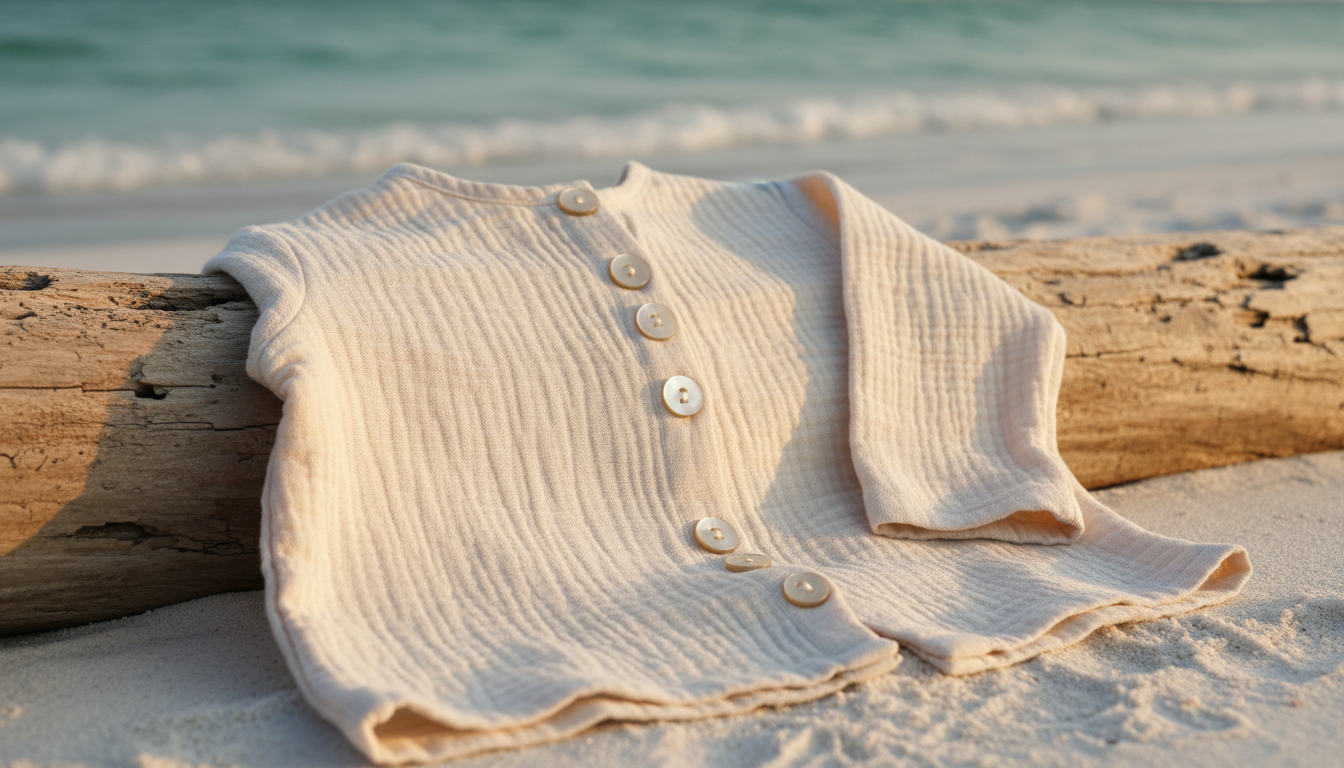
The investment in craftsmanship reveals its true value when introduced to the unique demands of the Florida climate. In Clearwater, where humidity and heat are constant companions, the material choices of a handmade children's clothing artisan become a matter of practical comfort. High-quality natural fibers, such as the premium linens and cotton voiles found in our curated heirloom collections, possess a superior ability to breathe. While synthetic blends often trap moisture against a child’s skin, these artisan-sourced textiles facilitate natural airflow, ensuring a toddler remains cool even during a humid afternoon.
This Parisian craftsmanship translates seamlessly to the high-end coastal aesthetic of the Gulf Coast. The effortless charm of a hand-smocked linen dress is perfectly suited for a sunset dinner at Clearwater Beach or a family portrait captured in the bright, golden Gulf light. Beyond the visual appeal, the structural integrity of these pieces is essential for coastal living. The corrosive nature of salt air and the frequent laundering required by an active outdoor lifestyle can quickly degrade mass-produced garments. However, the reinforced seams and hand-finished edges characteristic of about our Parisian sourcing are designed to withstand these harsh elements. By merging European artistry with Florida’s specific environmental needs, we provide garments that remain as resilient as they are refined.
The Ethics of the Atelier: Supporting Independent Fashion
The search for authenticity often leads discerning parents to ask which fashion brands are still independent. In an industry increasingly dominated by large corporate conglomerates, finding a label that prioritizes the person over the process is a rarity. Petit Soleil serves as a vital bridge to independent Parisian workshops, ensuring that your investment goes directly to the small ateliers where tradition is cherished rather than a corporate bottom line.
Transparency is the cornerstone of this relationship. By maintaining a direct line through about our Parisian sourcing, we eliminate the opaque layers common in global manufacturing. Each selection within our curated heirloom collections represents a conscious choice to uphold the dignity of the handmade children's clothing artisan. This support keeps centuries-old techniques viable in a modern economy, preventing them from being replaced by automated, soul-less alternatives that lack the same character and durability.
However, the human touch of our brand extends beyond the workshop walls. We believe that the artistry of a master's hands should create a ripple effect of compassion. A portion of our mission is dedicated to supporting street-working children, transforming the purchase of an heirloom into a gesture of global citizenship. By linking the skilled hands of a Parisian maker to the helping hands of our philanthropic initiatives, we ensure that every garment carries a legacy of both artistic beauty and social responsibility.
How to Recognize Truly Artisan Made Children's Clothing
Identifying the work of a genuine handmade children's clothing artisan requires a discerning eye for details machines cannot replicate. Begin by examining the embroidery. While factory stitching displays robotic uniformity, hand-embroidery features subtle, charming irregularities in stitch tension. Next, inspect the internal architecture. True luxury pieces utilize French seams, a technique where raw edges are fully encased to prevent skin irritation.
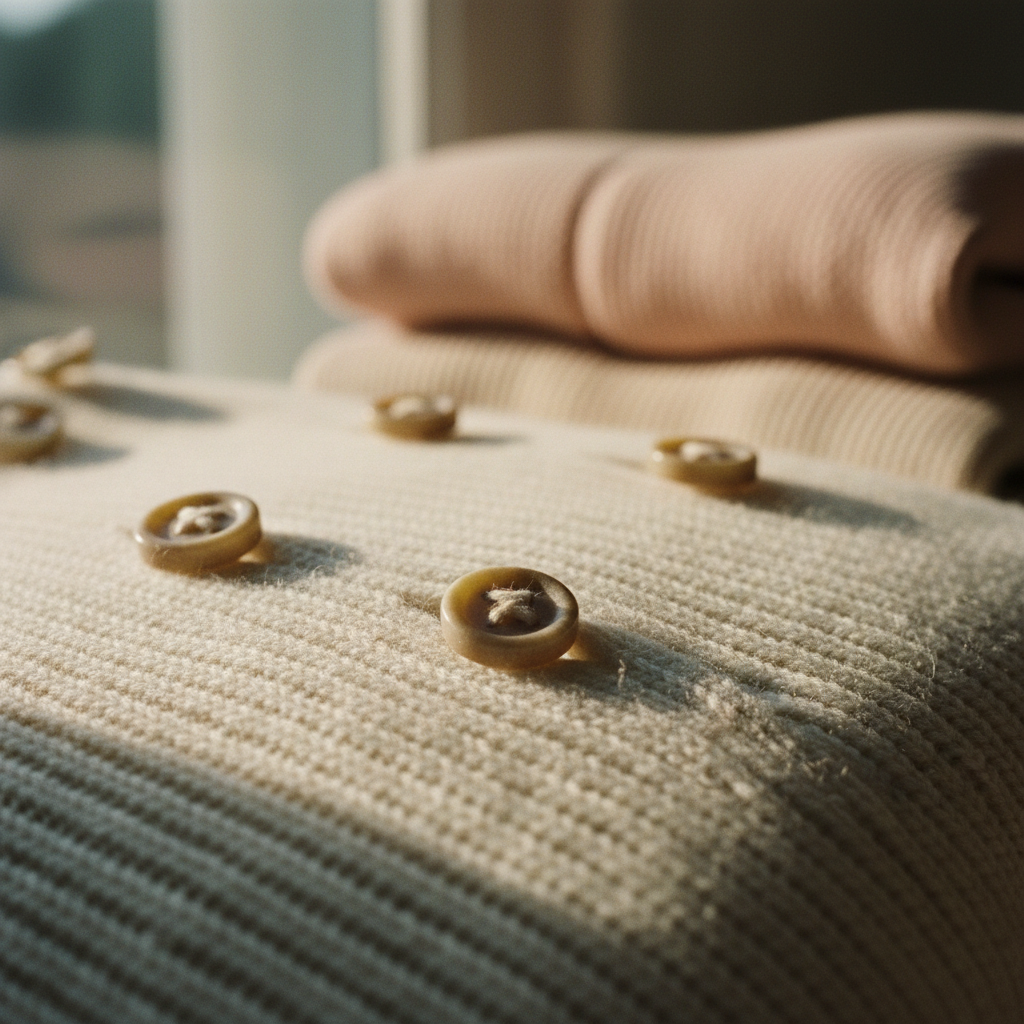
Check the closures as well. Look for the cool touch of mother-of-pearl or polished wood instead of plastic. Finally, perform a tactile assessment. A piece from our curated heirloom collections feels weightier in the hand due to fabric density, yet remains exceptionally light and breathable when worn. These structural hallmarks define a garment built for longevity rather than a single season.
Choosing handmade heirloom pieces means honoring the artisan's skill and ensuring that your child’s wardrobe carries a lasting legacy. These garments are defined by their soulful details and enduring quality, which mass production simply cannot replicate. If you want expert help finding the perfect pieces for your family, you can read more About our dedication to traditional craftsmanship. We believe every child deserves clothing made with intentionality; our team is here to help you preserve these precious memories for years to come.